Tao Ruspoli is a master of thought-provoking and emotionally powerful filmmaking. Whether it’s in a short film (“Just Say Know”), feature-length documentary (“Being in The World”) or narrative (“Fix”), Tao’s work inspires and catalyzes conversation.
Ruspoli’s upcoming film MONOGAMISH (“A Quest to Understand Sex, Love & Marriage in the 21st Century”) takes an in-depth look at the tension between the ideal of monogamy and the complexity of human desires.
We met up with Tao at his residence in Venice, CA and spoke about his background, passion for authentic art, and MONOGAMISH.
Irina Liakh: Thank you for having us over. There is such a creative vibe to your home. Has you background always included art?
Tao Ruspoli: Thanks for visiting. My background is primarily in still photography and filmmaking.
And philosophy?
Right! And Flamenco! Everything that starts with the F sound. [laughs]
Growing up in a very unconventional and creative family, when did you discover your passion for film and photography?
I guess when I was about 13, I realized that I love documenting the world around me. I started shooting on film as a teenager. And I also started reading philosophy on the side in high school.
You started playing music around the same age. Were you exploring different art forms and ways to perceive the world? What made you choose philosophy as your major at school?
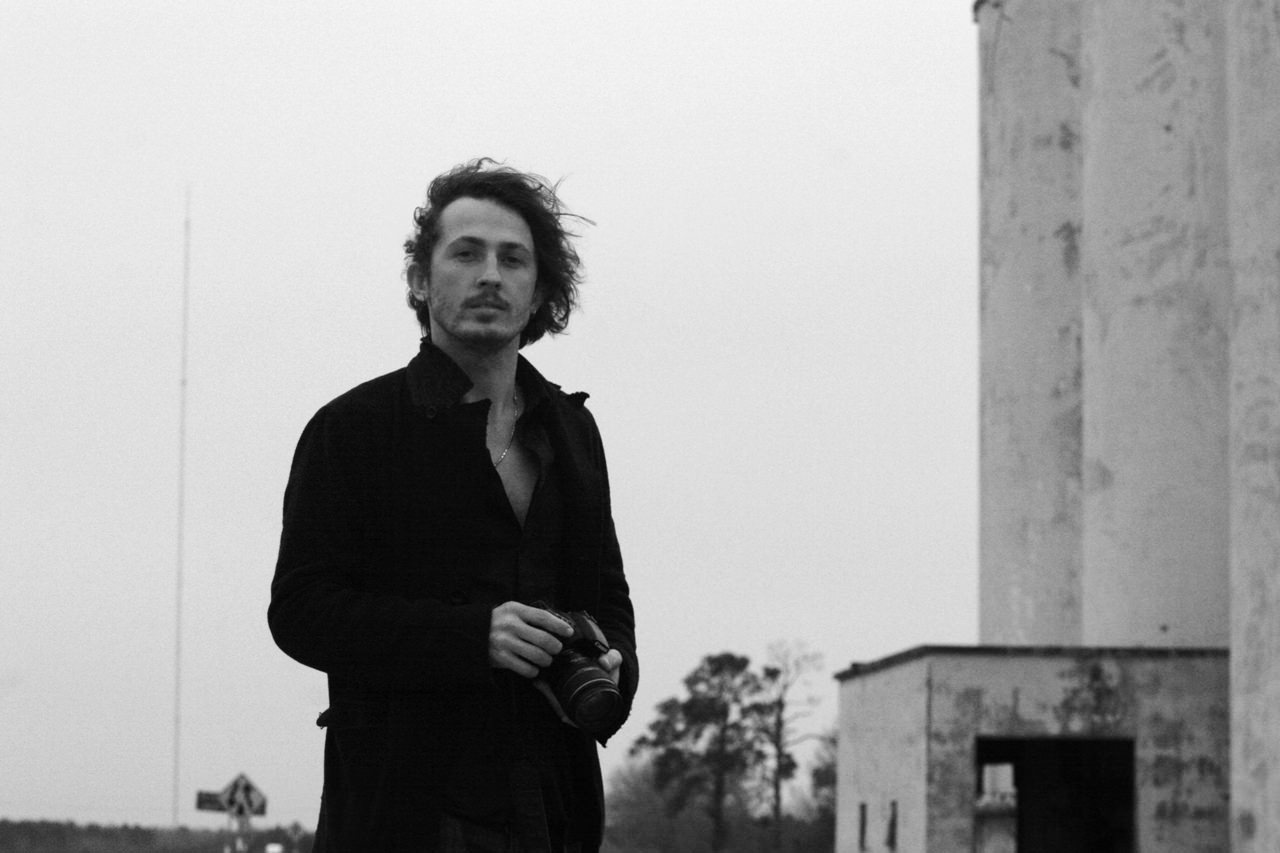
Yes, I started playing guitar also in high school, and then I went to UC Berkeley for University. There a few things happened that shaped me permanently. I took a philosophy class as an elective, called “Existentialism in Literature and Film”. There I realized that I could become a filmmaker, and pursue philosophy as a way of exploring what life means and what we are doing here. I always thought that to be a philosopher one had to be a professor or a teacher; and I didn’t want to do that. I’m not an academic at heart. But this class made me change my major to philosophy and pick up a movie camera for the first time. It helped me realize that I wanted to use filmmaking as a medium that could encompass all my passions: For example, I originally wanted to study architecture (that’s what I went to Berkeley to study) and I realized film contained architecture in the form of production design, but even more importantly, film contained literature, history, philosophy, theater, and music.
Were you influenced by how artistic your family was?
On the contrary. Everyone reacts against their parents, so it never even occurred to me that I’d be a filmmaker, because I wouldn’t want do what my family did. My mom was an actress, my grandfather was an actor, I thought I wanted to be something more “serious”.
As for flamenco, when I was 15, I met Keith Richards, the guitar player of The Rolling Stones, who was a friend of my father’s, and he told me, “You should play flamenco, if you want to play the guitar”. Of all people, for him to say that! That was very odd.
Three years later I went to a concert of Paco de Lucia (The great Spanish Flamenco guitarist) and this music just hit me so strongly. In the program, there was an ad for a local flamenco teacher, and I started taking lessons with him. I fell completely in love with it; I didn’t play any other type of guitar for 20 years. I went to Spain for a couple of weeks, and that turned into eight months. I took a semester off just to study flamenco, and I started making my first film “Flamenco: A Personal Journey” when I was 21.
You seem very drawn to honest types of art, whether it’s making documentary films or playing flamenco. is it because they are completely authentic and raw?
Yeah, I was always drawn to worlds that seemed to cultivate a certain authenticity. For example, my attraction to flamenco paralleled very interestingly what I was studying in philosophy. I was focusing a lot of my studies on the German philosopher Martin Heidegger, who then became the inspiration for my film “Being in the world”. (The idea was to make a feature-length documentary exploring how his ideas might apply to real life.) He had this idea that in order to have a meaningful life, we need to become skilled. Not just in a vacuum, but within a community, one that provides a set of standards and practices that situate us in a particular place, one that’s separate from every other place and every other time in human history. So this idea that mastery individuates us and places us in a particular place and time in the world, and therefore gives a certain significance to ourselves, to the time that we are in, to the place that we live, to the practices that we have, as opposed to others. Flamenco was a perfect example of this because you can’t understand flamenco abstractly without understanding it as a way of life. And this way of life could only emerge from these very particular historical circumstance, from the Gypsies who came from India and brought with them the cultures of Eastern Europe and North Africa and were incorporated in their music on its journey to the south of Spain.
So this was a first example I found of a real-world application of the philosophical ideas that I was thinking about. Philosophy is only worth doing if only it applies to life, right? At its best it shouldn’t just be a mental exercise. So I picked my camera, and I started documenting life amongst the Gypsies of Andalucia.
Have you had mentors when you started filmmaking?
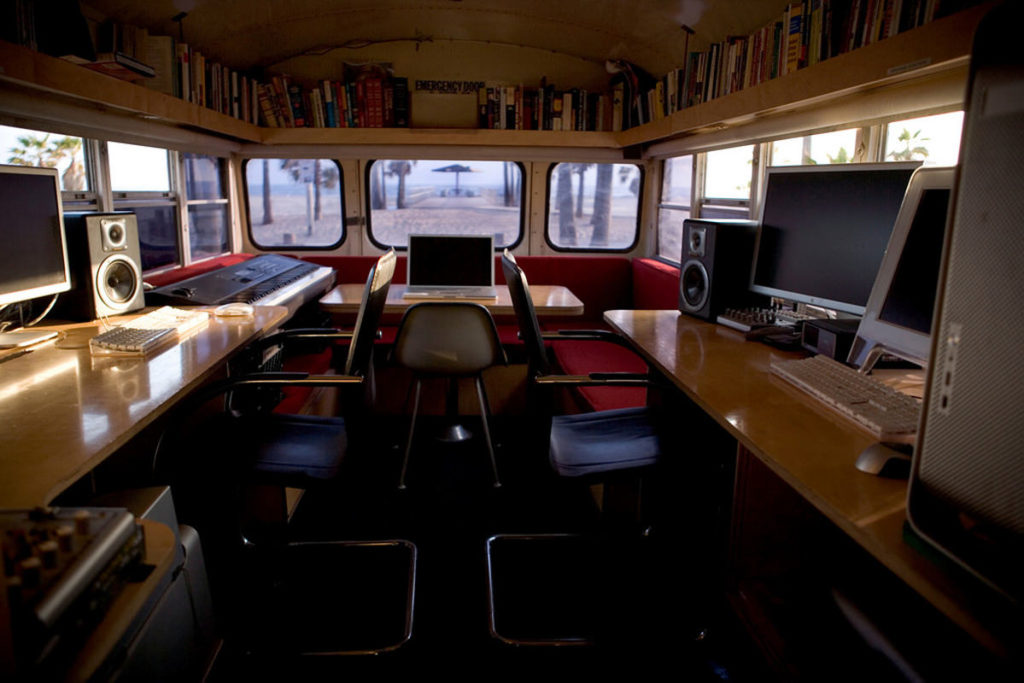
I started doing it on my own, but I looked up to people and I was also taking film history courses at Berkeley. I discovered the work of Werner Herzog, a German filmmaker who I admire still very much. Also all the French New-Wave filmmakers, Godard and Truffaut and the Italians of course, from De Sica to Fellini. I was very inspired by the Russian Avant-Garde filmmakers of the 1920’s, like Sergei Eisenstein and Dziga Vertov, who was a particulary big influence on me. He had a train and he’d go around Russia and document “real life”, and he had editing equipment inside the train.
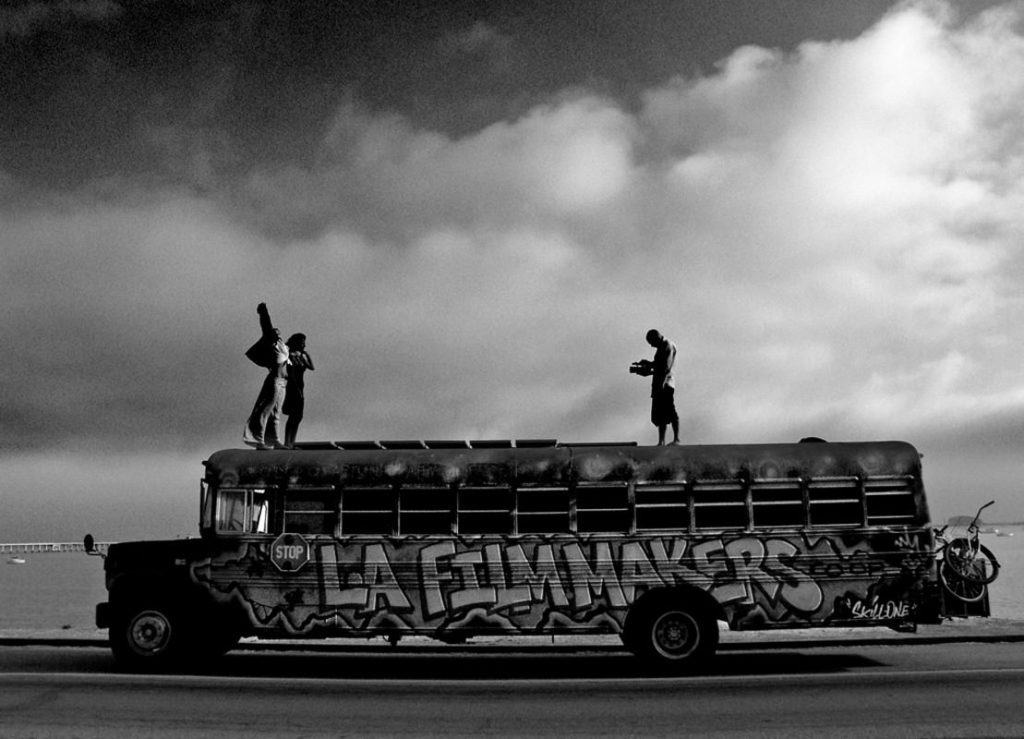
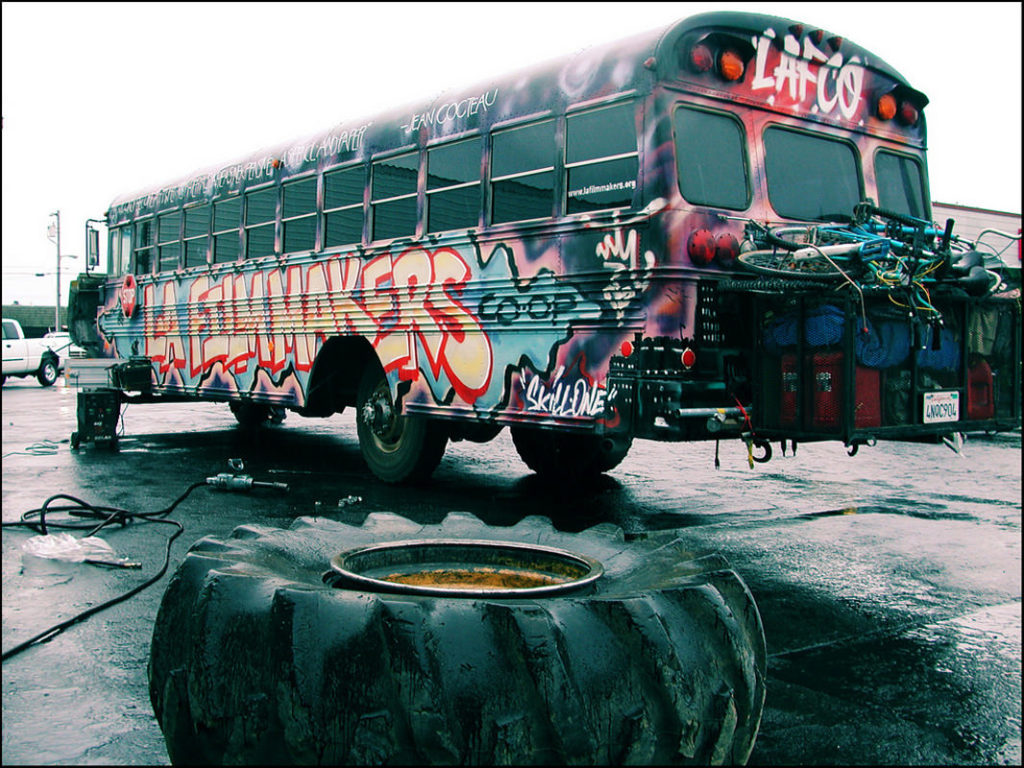
Is that what inspired the LAFCO (The Los Angeles Filmmakers Cooperative) bus?
Partially, yes. I think there was a movie called “The Last Bolshevik” by Chris Marker that talked about Dziga Vertov’s experiment of wanting to find the essence of cinema without borrowing from other media. In contrast, narrative Hollywood filmmaking was borrowing from theater or literature in telling a story. But Vertov and Eisenstein said that the essence of filmmaking is going out into the world and then creating editing that’s not just transparent and invisible, the way it was practiced in Hollywood, but instead creates collisions and makes you aware of the fact that you can put one shot against another and create a kind of explosion between those two images.
I came back from Spain, finished school and moved back to LA. That’s when I bought the school bus on eBay, and due to other circumstances, I ended up having to live in that bus for 2 years. So I traveled around the country, and I put editing equipment inside the bus. There was 3 of us living in it: a photographer, another filmmaker and myself. I ended up getting married inside the bus; then I moved into a proper house here in Venice. I was married for eight years, then got divorced, and that’s what inspired the current project.
You first came to our attention with “The Love Project”. Tell us more about it and what inspired you to create those short films!
As I was just splitting up from my wife, I met this neighbor of mine, Roberta Haze. She was this really eccentric, wonderful 75-year old woman who had a 40-year-old boyfriend and a real sassy attitude. I’ve always used filmmaking as a way to figure out what’s going on around me, and that’s why I made another movie called “Just Say Know” about drug addiction in my family. And “Fix” was my first feature film which was about struggling with my brother’s addiction. So “The Love Project” started with me asking advice and seeking solace and wisdom from this amazing woman. This 10-minute film came out of it, and Oliver Stone saw it and hired me to be a second unit director on his film Savages because of it. It really encouraged me. I made a couple more episodes after that, but I realized that what I really wanted to do is make a feature-length documentary exploring the issues of where the ideal of monogamy came from and where the ritual and practice of marriage came from. We have this uneasy tension between an ideal that’s presented to us in media, and the fact that we have desires and tendencies that are much more complicated.
In your film are you exploring all the aspects from historical to your personal experience, to expert opinions?
It started off as my personal story, but I then talked to anthropologists, psychologists, philosophers, historians, and sex therapists (among others.) I did over a hundred interviews, so it’s a very rich exploration. And it’s a big topic.
You got some amazing people on board for the project, including Dan Savage, Esther Perel and Christopher Ryan. How did you manage that?
It took a very long time. I started by reaching out to Dan Savage, who I was a big fan of since college. I was reading him at Berkeley, when he was just syndicated in a few weekly newspapers and he wasn’t that famous. So I wrote to him saying: I just got divorced and it was really painful. I’ve been reading you for a long time, so now I have this idea of making this movie and I’d like you to star in it, and I’d like to call it “Monogamish”. He coined this word. And I find the word very interesting not only the way he uses it. He uses it to advocate for a certain type of relationship, where people are mostly monogamous, but allow for some flexibility. But I also liked the word because I think that it describes the whole culture. I think our culture is monogamish. We have this very conflicted relationship to this ideal. On one hand it’s sold to us in every song and movie, and in so much of popular culture. On the other hand, we have these instincts and desires that take us in other directions. I think that’s a good topic for a movie because it’s inherently conflictual.
When I wrote to Dan Savage, I didn’t hear back from him. Six months later, finally his agent wrote back saying that I had to change the name because Dan owns the trademark to the word monogamish. And I was a bit discouraged, but I kept interviewing other people. Finally after three years, with the help of some of the other interview subjects, like Chrisopher Ryan (author of Sex at Dawn) I convinced him to come be in the movie, and now he is the star of the film and he’s allowed me to call it Monogamish. I’m really pleased with his role in it. And as we speak right now, we are color correcting and doing the final sound mix.
How long was the process to get the film made?
It took almost four years. Of course, I had other projects. In the meantime, I’m working on the new feature film for Ed Pressman, who is a legendary producer, which is a remake of a 1960s film called “The Girl on a Motorcycle”, which had Marianne Faithfull and Alain Delon in it. And now we are going be submitting “Monogamish” to film festivals and hopefully you are going to see it at a local festival and on Netflix!
You included various perspectives in the film, from talking to the journalist and lawyer Eric Berkowitz (author of “Sex and Punishment”), to visiting the Tamera Free Love commune in Portugal. Are there a lot of everyday people talking about their relationships as opposed to experts?
I’d say about half and half. And there is my personal story, going back to Italy and looking into my family history. I have an ancient family in Rome, which goes back more than 1200 years, to the year 800. In the film I go to my family’s castle outside of Rome and look at the relationship between the church and marriage, and that whole complex power dynamic. My family was very close to the Vatican, especially since we got the title of Prince from Vatican, in exchange for giving them soldiers and military support. So it’s very interesting that the church needed soldiers to begin with and was involved in politics, and at the same time involved in people’s personal lives in the sense of marriage, which of course traditionally happens in church in front of a priest and, and of course there’s all the morality that surrounds sex. In other words, there seems to be a very uneasy tension between religion, economics, power, sex, family, and love. So that’s what I wanted to explore in the movie.
I talked to my mother who lives in Spain and met my father when she was 16 and he was nearly 50, and I talk to my cousin in the family castle. She talks about all the family history and how marriage was used to consolidate power, and how it had nothing to do with love at all; and I talk to the experts, like Stephanie Coontz, who is the world’s leading authority on the history of marriage. At first I was worried, as a kind of snobby philosopher, thinking that this topic of marriage and relationships seems a little bit wishy-washy, but that was a very wrong presumption of mine. It’s an extremely deep subject, from every angle.
So would you say you are not promoting just one right way, but showing the complexities of human nature?
If anything I’m promoting questioning the assumptions. And hopefully I’m promoting a conversation amongst individuals after they see the film. We tend to think that these things have been set in stone, but attitudes about sex and family and relationships are changing all the time. Just look at the last 100 years. If you look at the 50s compared to the 60s, compared to the 80s, you know you’ll have completely different social mores and attitudes about these issues. They depend not only on religion as we discussed, but on the country you’re in, on sexual health issues, sexually transmitted diseases like HIV, and things like the emergence of the birth control pill, and people rebelling against the morals they were handed down. So I think it would be really presumptuous of me to prescribe one answer, but I think that if I can help expand people’s vocabulary for thinking about these things, then I will have succeeded.
Your Kickstarter campaign for “Monigamish” was very successful. Did you expect it to be so supported?
This campaign validated for me that this was an important topic to be exploring. And it just reminded me of the responsibility I have to treat it seriously. We were trying to raise $35 000, which I at first thought was too ambitious, and I was worried that we were never going to reach it, but we reached that goal in around four days. We had over 500 backers and most of them were total strangers. So I just realized that this is a topic that touches everybody.
You speak several different languages and we really enjoy following your travel adventures featured on your blog. Any specific place that has inspired you the most?
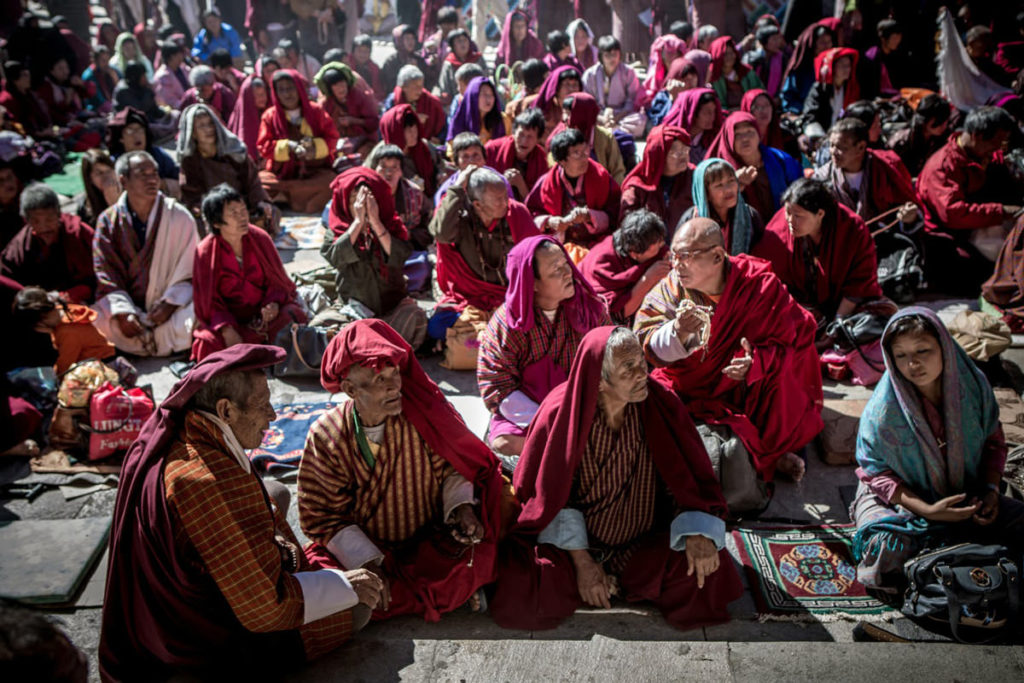
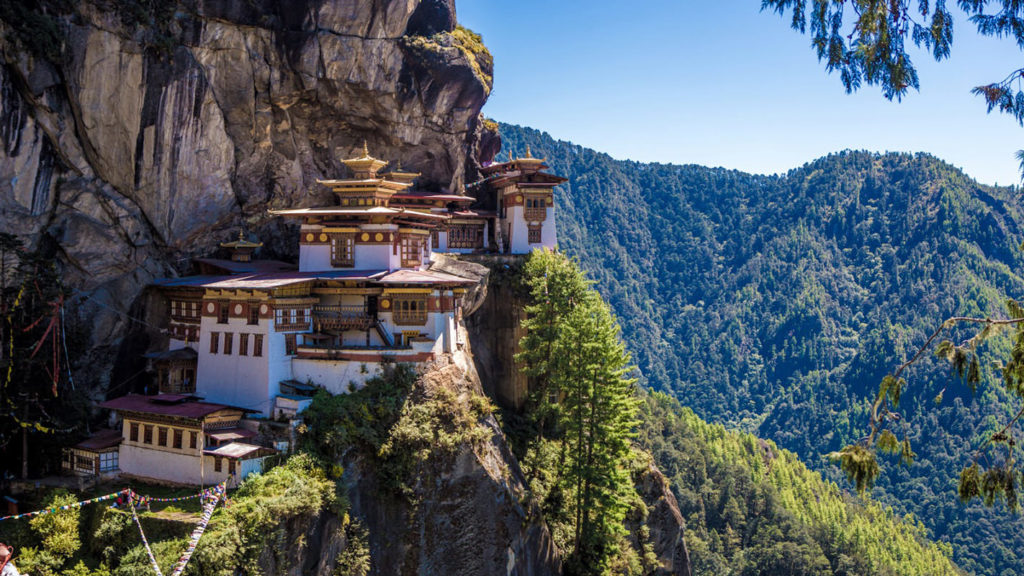
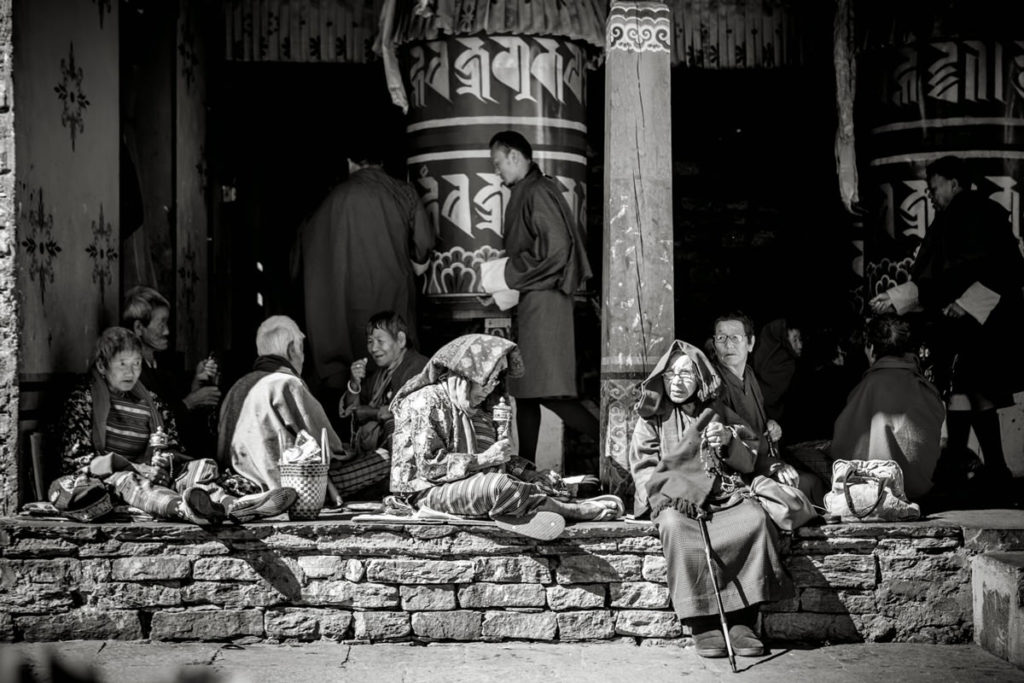
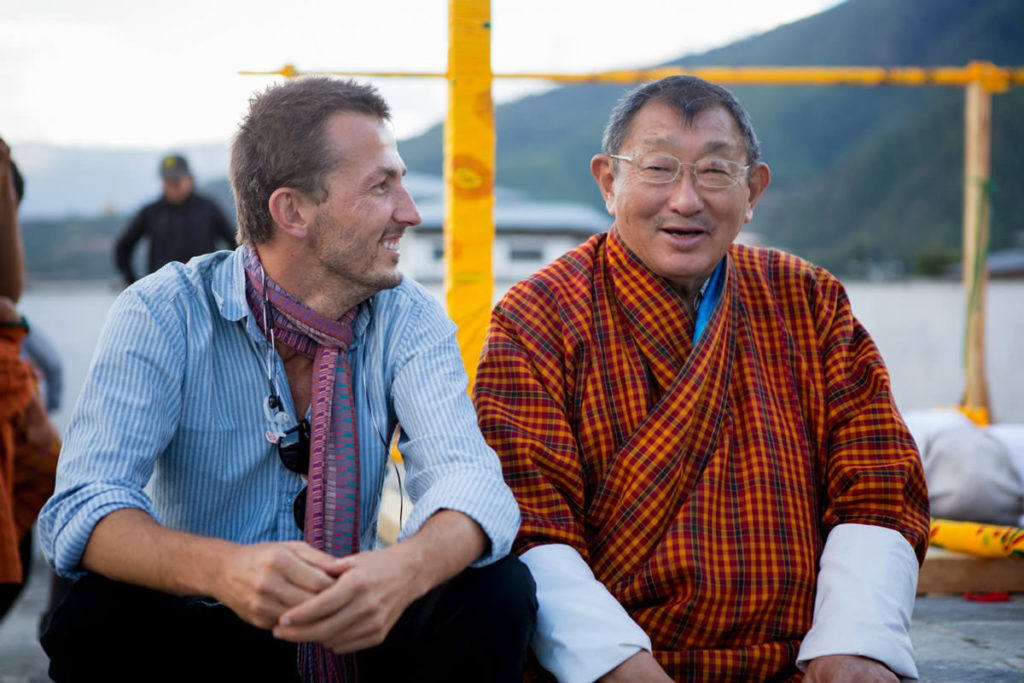
I speak Spanish, Italian, and French. Of course, Spain has inspired me a lot. I mean, everywhere that I’ve been to… I was in Bhutan last year, and it was incredible. I try to travel as much as possible, because I think once you become complacent in a place – you don’t pay as much attention. When you travel, your antennas are up and your senses are all heightened. It’s important to travel a lot and see the world through fresh eyes.
Are there any filmmakers that inspire you?
As I said, people like Werner Herzog and Dziga Vertov; Errol Morris is an amazing filmmaker who I look up to very much. That’s just for documentaries. There are so many! I spent years, in my twenties especially, watching thousands and thousands of movies. And all of that hopefully helped me develop a language and a vocabulary of filmmaking, which I hope is developing into a unique style and point of view.
Interview by Irina Liakh
Images courtesy of Tao Ruspoli