They called her the Angel of South Central. After creating a safe haven in the middle of a rough neighborhood, Debrah Constance became a mother figure to hundreds of children. No matter what their story was, what gang they were in or how society labeled them- she loved them all and wanted to give them a chance for a better future.
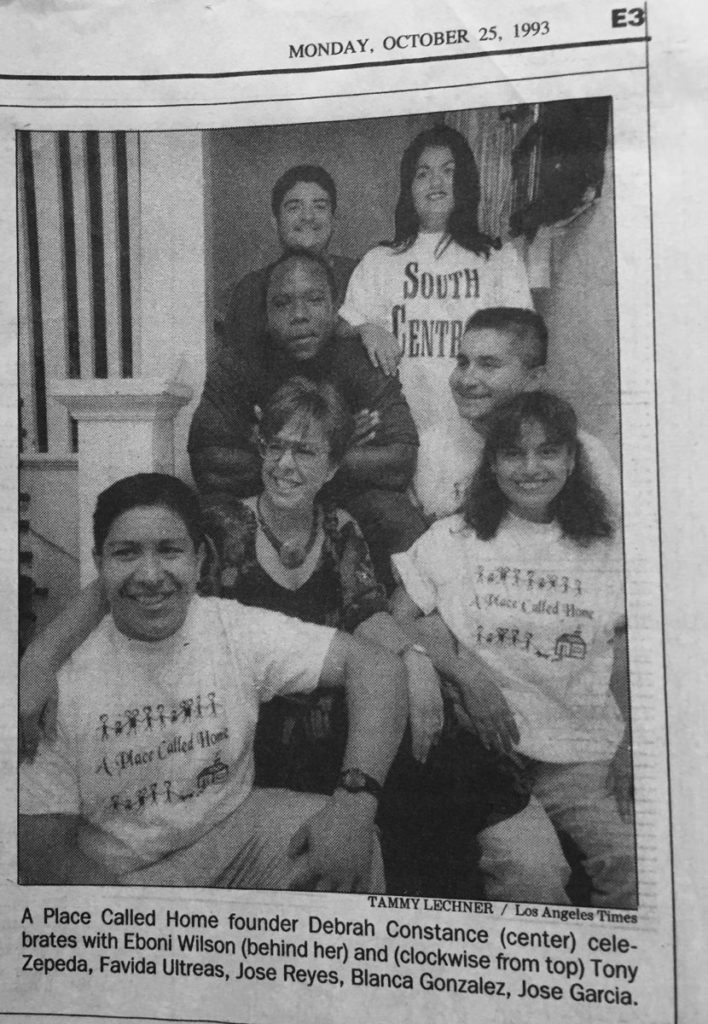
Debrah has risen above many challenges to fulfill her life mission. She founded A Place Called Home in 1993, and it began with 12 children in a local church.
21 years after its conception, the dynamic APCH non-profit youth center opens its doors daily to more than 300 children and youth each day. A Place Called Home provides positive family environment, educational and art programs, counseling, mentorship, compassion and unconditional love to at-risk youth in South Central Los Angeles community.
Debrah invited us to her home in Venice, CA to talk about the history of A Place Called Home, APCH supporters and applying personal struggles to helping children.
Being originally from New York, what brought you to California?
Debrah Constance: I was born in New York City, but we eventually moved to Milwaukee. My grandparents moved to California, so I spent my summers there, helping my uncle David Mirisch at his advertising and PR agency. My grandparents were in the motion picture business, so I got an inside look of the industry. I had so many jobs in Milwaukee. My family was wealthy, but I worked; I worked my entire life. Everyone asks, “Oh, so what college did you get your degree from?” I only graduated from 10th grade and started working. Got married at 17. I left my abusive husband, and after my grandma passed away, I moved to LA. I was 19 years old. For the next ten years, I had all the jobs you could imagine, had my son Gideon and survived cancer.
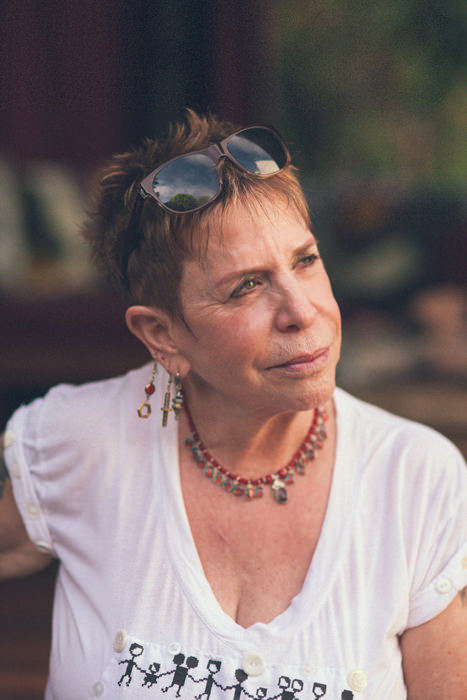
Debrah Constance by Polina Rabtseva
You first became involved with South Central while working in real estate. What drew you to a part of the city that was completely different from the world of high-end mansions of Beverly Hills and Bel Air?
I started my career in the world of real estate working with Joyce Rey. Joyce happened to be one of the top brokers in the city; she was selling high-end property. Eventually, Joyce and I moved to Harleigh Sandler, which became Merril Lynch, where I worked as a Director of Advertising and Marketing. I was great at designing ads. I don’t remember how I learned specifically, but tell me to design an ad and I can do it in a second! When that job ended, I walked up the block to John Douglas’s office and said I wanted to interview for a job in advertising and marketing, he said, “Fine!.” So I interviewed and got the job and eventually became Vice President of Advertising and Marketing.
I was also a Director of Community Affairs, so organizations would come and ask to fund a library or give a scholarship to a talented child. I’ve always believed in funding children. Then I saw the movie “Stand and Deliver” and I was so moved. And then the next day in the LA Times I saw they featured all the great teachers and in the bottom left hand corner there was a teacher named Roland Ganges. He taught chemistry to students at Thomas Jefferson High School, which was a very impacted place, right next to the Newton Police Station.
I asked Douglas how he felt about funding a teacher in the inner city and giving 10,000 dollars, and he said, “Okay.” I thought it would be great to support a teacher who’d help dozens of students. So I wrote a note and sent Roland with Snooki’s cookies and milk. No answer! About a week later he calls and tells me, “ I don’t want Mr. Douglas’s money, I want your time.” I thought, “Is he out of his mind?”. I thought he was a little crazy. I didn’t even know my way out of Beverly Hills, so he had to give me some heavy directions. And going through the metal detectors was unusual to me. When I got to Roland’s class, I looked around, and that’s all I had to do to fall in love with the kids.
I didn’t know who they were, who was a good student, who was a bad student. I loved them all. Roland gave me a big talk how these kids have never seen the ocean, the mountains, they’ve never seen anything in this city, they all have just lived here in South Central. They would do anything to get out of here. I said, “Okay, I can do that.” And the first program I started was one hike a month. I’d get a bus through John Douglas, take 15 kids and a few volunteers, and we’d hike down by the mountains, Pacific Palisades, down by the ocean. And the kids… Some of them would be making out in little coves, some would smoke pot. And I was thinking, “Oh God, What am I gonna do?” [laughing]. I got the brokers involved. And I was really surprised that they were willing to deal with the hardcore kids from another part of the city. They were, and this went on for a year or two.
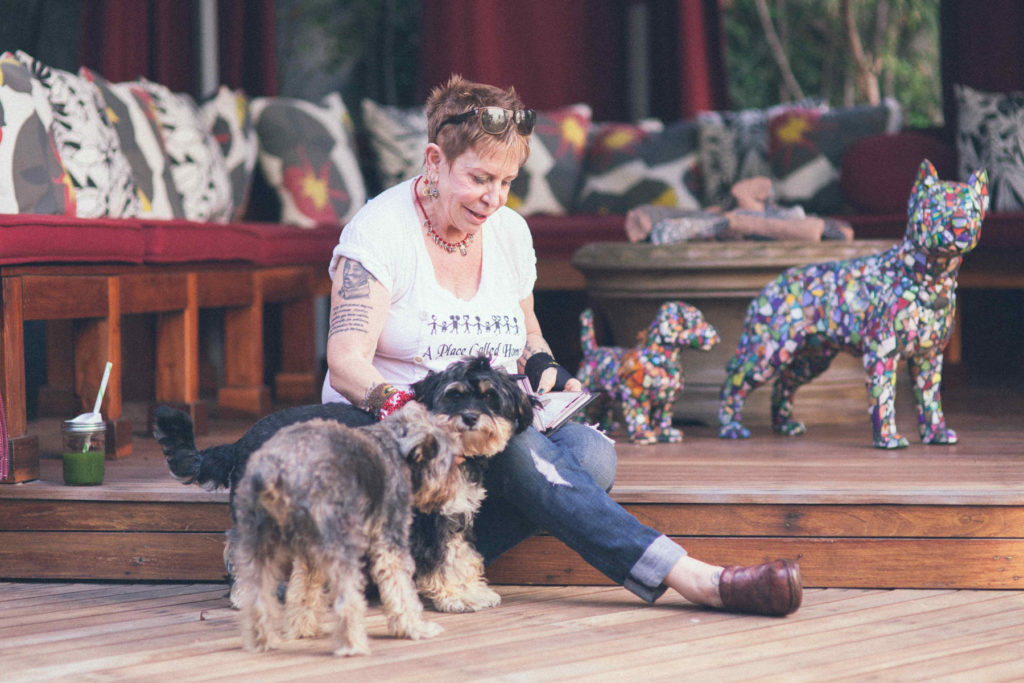
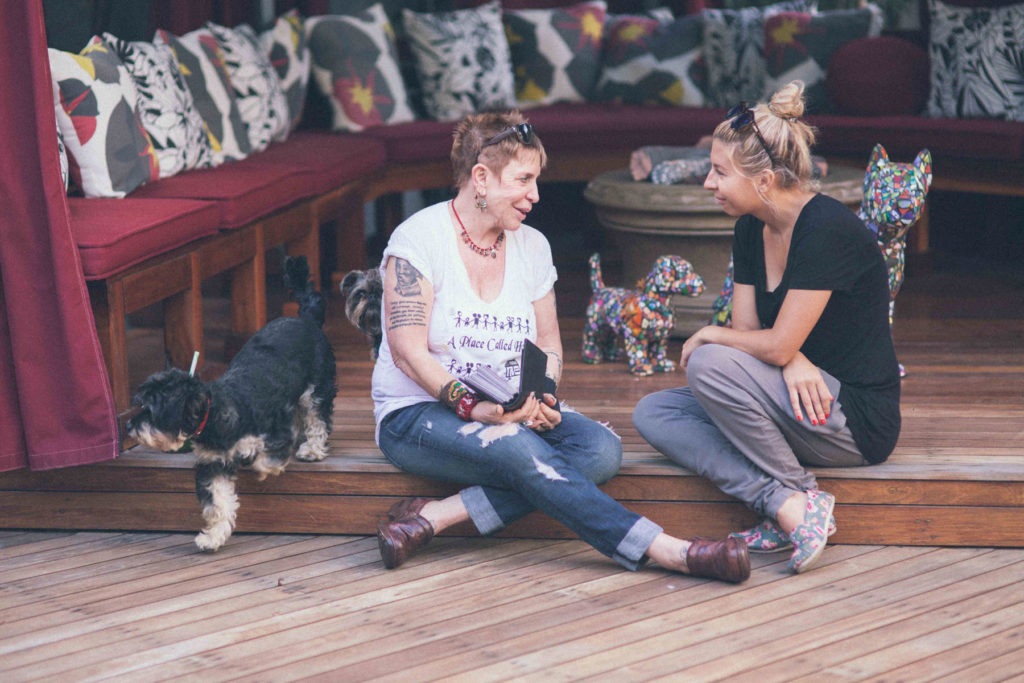
Debrah Constance & Irina Liakh by Polina Rabtseva
Were you still working full time at John Douglas’s firm?
Yes! I was on several Boards: National Council of Jewish Women, Alternative Living for the Aging, Clare Foundation. I took these kids with me to all the different events. At Alternative Living for the Aging they fed everyone for the holidays. We went to see Eve Ensler’s play at National Council for Jewish Women and even John Douglas went along with them. At Clare Foundation we did “workouts for the homeless.” Also, the kids went down to Skid Row and interviewed the homeless, and the best writer got $5,000 towards college.
While doing all those things, I thought, “All I wanna do is work with kids.” I subscribed to “The Chronicle of Philanthropy”, and started sending out my resume out all over the city. I had a huge resume, but no response from anyone. Then I met with David Crippens, who was a Vice President of KCET. I sat down with David, and he said, “Debrah, what do you really wanna do?” I said, “I came here, because I thought you could give me a job in children’s programming.” He said: “No, what do you really wanna do with your life, Debrah?” And I realized nobody in my life had ever asked me that question. And I said: “All I really wanna do is open a safe house for the children of Jefferson.” He said: “You could do that,” I said, “No, I can’t. I’ve never told anyone this, but I never graduated from high school, I’m not a teacher.” He said: It doesn’t matter, just write down: 501 (c)3 and do it. The next day, I told John Douglas I was going to quit the job to make it happen. He gave me six months severance pay and the use of the office.
I was sitting in a restaurant with one of the women I was sponsoring in AA and said, “What am I gonna do?”. And the man who was sitting behind us gave me his card and said, “Just come to this address, and I’ll help you.” And he did, he also helped me with the name “A Place Called Home”.
Did you experience any difficulties early on?
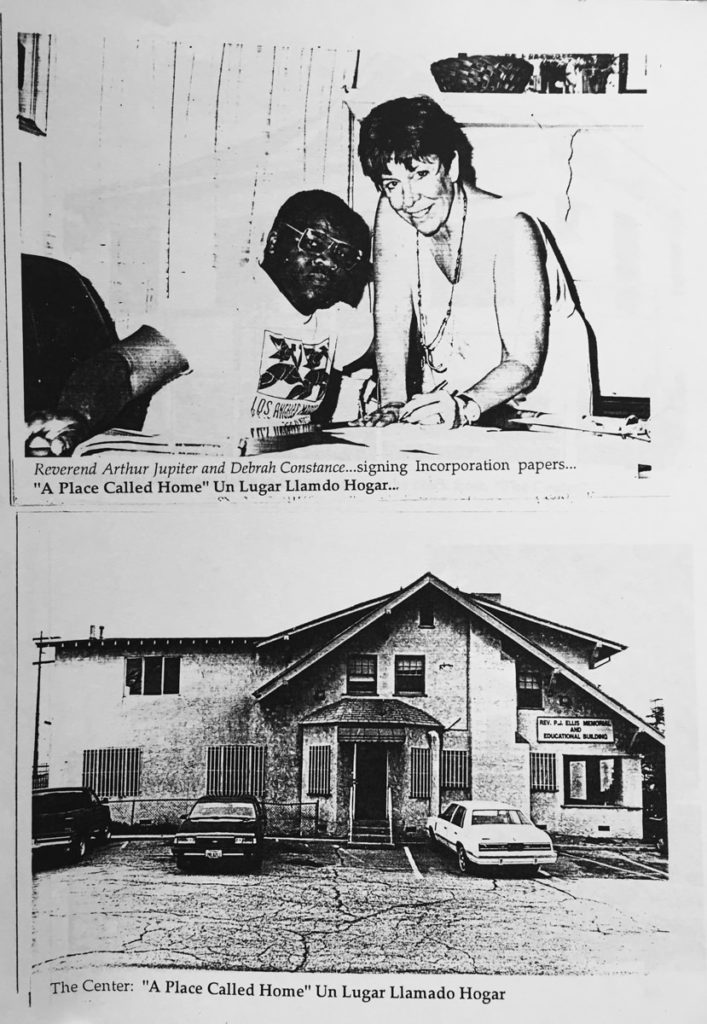
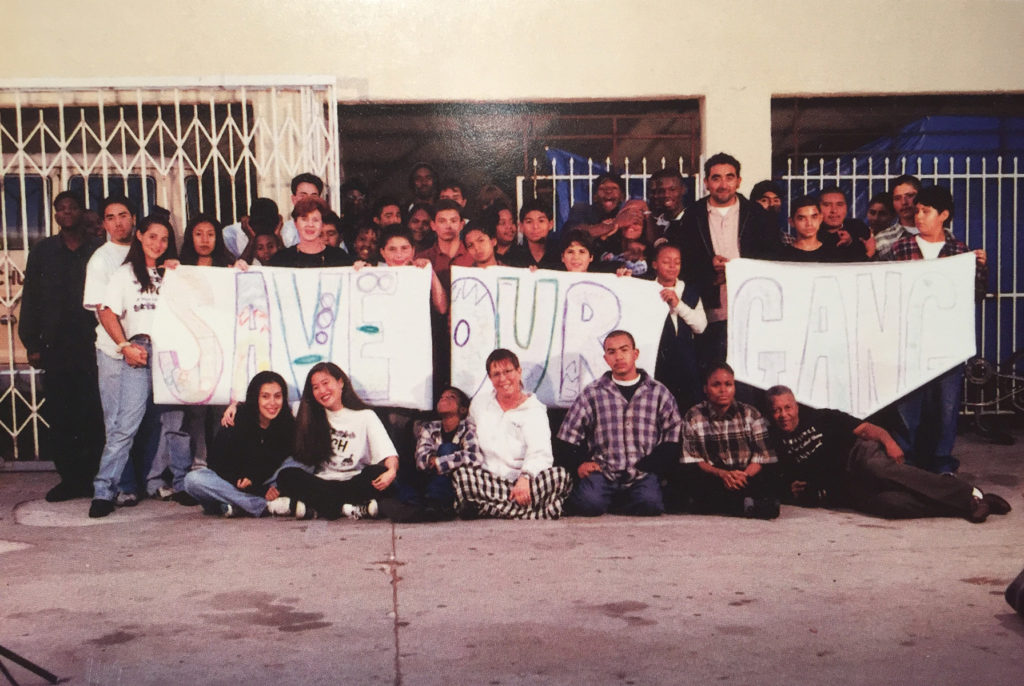
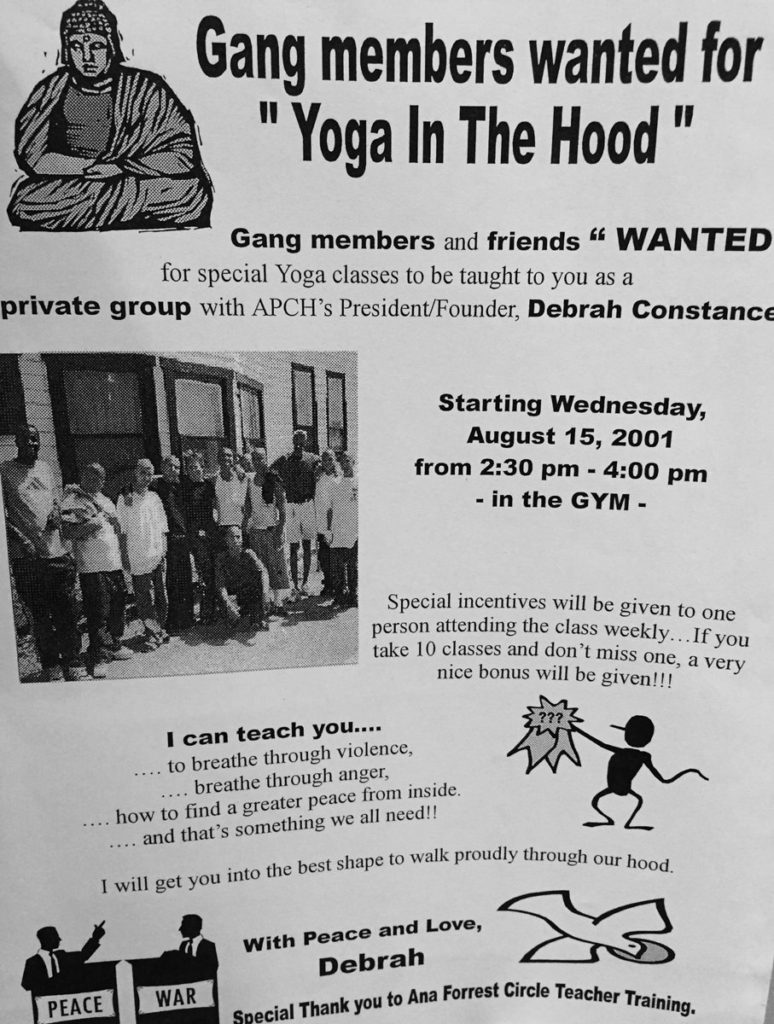
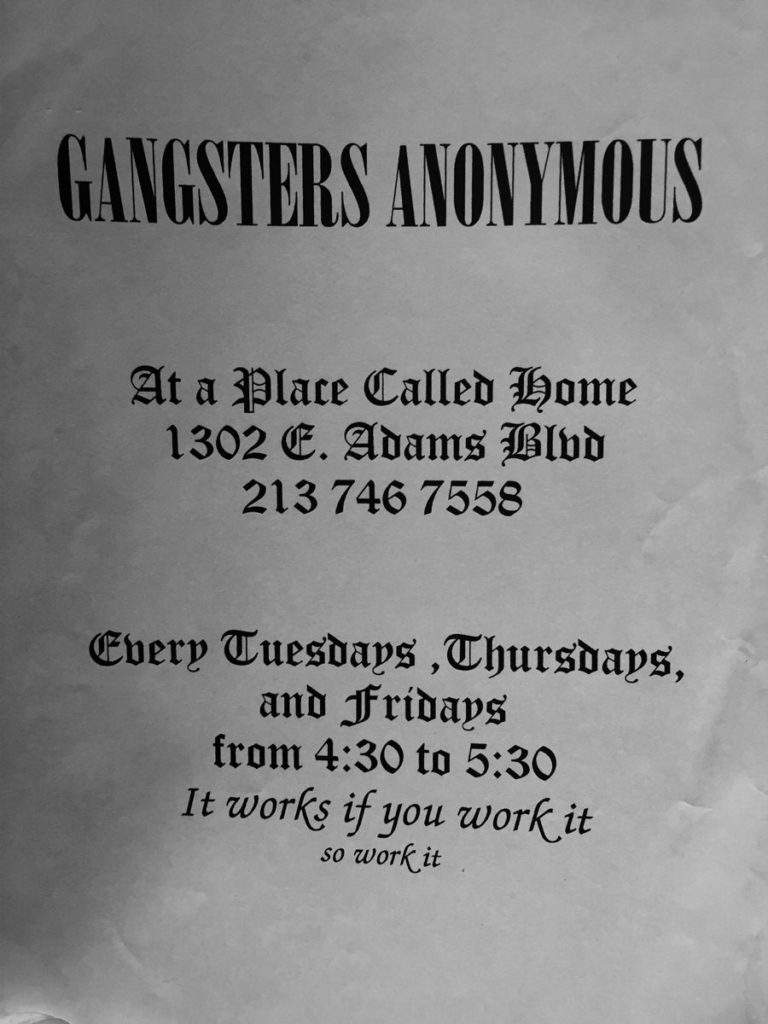
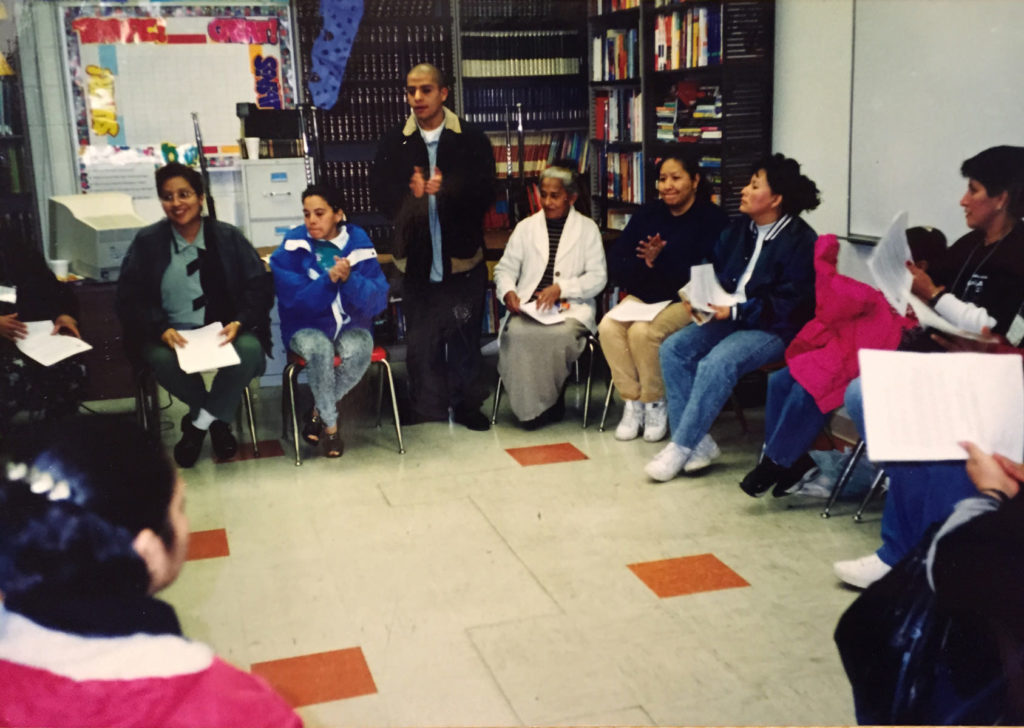
For the next six months, me and a few young women I sponsored at AA tried to create something out of nothing. Right across the street from Jefferson High School there was a church. I met Reverend Jupiter and told him what I was starting. There was a big house next to the church he said we could rent. It was old, but it didn’t matter. I put a brochure together that showed exactly what “A Place Called Home” would be: the study room, yoga room, weaving room, twelve-step room and kitchen. We opened our doors in September 1993 with 12 kids from Jefferson school showing up. Then all of a sudden the church kicked us out! Reverend Jupiter took me up the block and introduced me to Bishop Richardson. Bishop Richardson said as long as there was no damage we could be in his church. So we started there. I started meetings and our Gangsters Anonymous program and in that church we had a grand opening. APCH was in the middle of an entirely Latino neighborhood, but for some reason we attracted both Latino and African American kids, on the streets they were in rival gangs. Not that they got along, but they were in one place together.
I started the ages 13-22. I had those ages because everyone helps young children, and nobody helps the older children. I knew If you help the older children, we had a chance of getting them out of the gang, getting them back in the school, getting them into trade school. At least they would have a chance. And that was my mission.
There were some heavy scenes. One Christmas at the church, the Latino gang showed up with big guns. I had a bunch of board people there; my security was scared, everybody went under the tables. They were coming up the stairs, and I said, “Put those guns down, or you are not gonna have Christmas this year.” And they did. That’s how much power mother figures have. Nobody realized- behind the tattoos, shaved heads and weapons those kids were children, hungry for affection. I bought all those kids Teddy Bears, and they held on to them like it was the most valuable thing in the world. And I then I thought: “Oh my god, what if somebody steals one of their Teddy Bears? Then they’ll be dead.”
I eventually packed up and moved to South Central to be closer to APCH.
When APCH began, who were your most involved early supporters? Did you try to attract big names?
A month after we moved into the church, someone called. It was Johnny Carson. I thought someone was playing a joke. It was him, and he became my main mentor. He mentored me until the day he died.
And he was the one who eventually helped you to buy a building?
Yes, he wrote a check for a million dollars. It was awhile later. He started helping, and I’d call him to talk all the time. He was incredible. He was so kind. No words to really describe him.
One of the first supporters was Robert Greenwald. He referred Chico Brown to me, a young man who was getting out of prison. He was a notorious drug dealer, dealing drugs with “freeway” Rick Ross and part of the “Crisps” gang. Greenwald thought he’d be great with the gang members because he was a gang member. And he was! He became the director of Gang Prevention and Intervention; he was giving back everything he learned the hard way. After probation, he started his non-profit Reach Back LA and Mark Wahlberg helped him start it.
We had Alfre Woodard and her husband Roderick Spencer support us! She took the kids to the movies, tried to start an acting program. We had Marcia Cross and many actresses to come over and directors as well. It was difficult with older kids- they would show up one week and wouldn’t show up another.
I didn’t look for anyone. People would just come and offer their help.
I met Arianna Huffington early on, and she came on board of APCH, I’m very close to her. She would take twelve of my hardcore gang members to lunch with Bill Maher. He organized a comedy show for them to raise money. We had board meetings at her house, and I’d make weavings for her and dolls. I like to make dolls for people who teach me things.
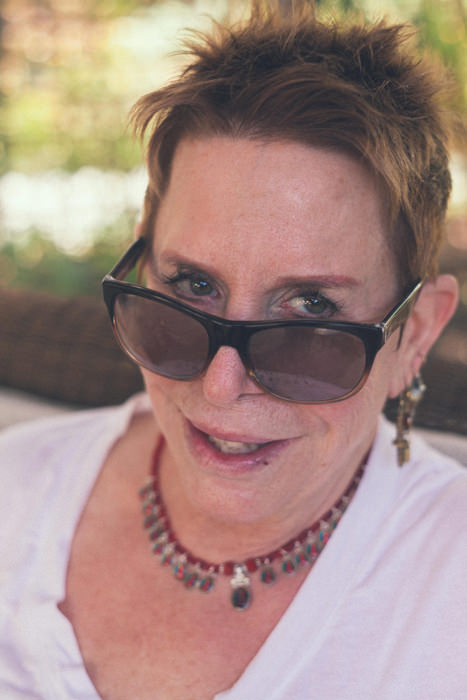
Debrah Constance by Polina Rabtseva
In one of the books about Tupac Shakur, I’ve read that he was an early APCH supporter and headlined a benefit concert for the organization, raising awareness and endorsement. Is it true and how was he first a part of APCH?
I was actually called to testify for Tupac after he was arrested. We learned that he wanted to do something for A Place Called Home as community service. I stood in front of the judge and said that if Tupac could do a concert for APCH, that would really help us. So he was sentenced to do a benefit for us, but he was killed shortly before it was supposed to happen.
Before Tupac died, I was invited to a Mother’s day event at the Beverly Wilshire Hotel that Suge Knight arranged for his performers. We sat with Tupac and his mother Afeni, who was my age, and my son Gideon and Tupac were the same age as well. We had so much fun.
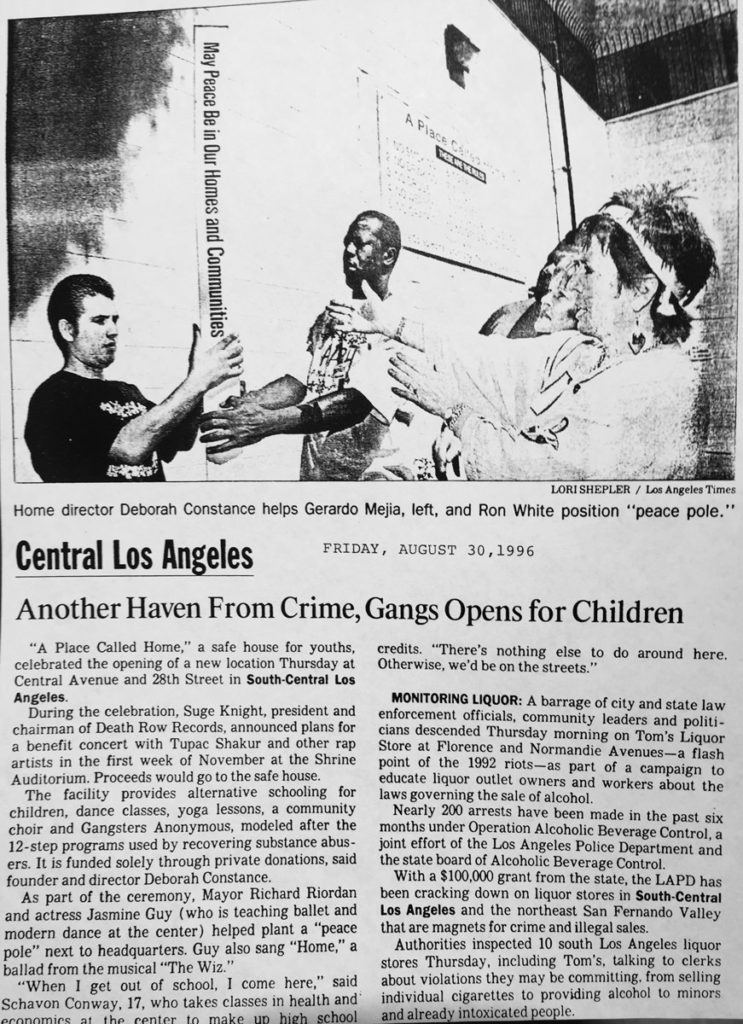
Suge Knight provided us with the equipment for professional music and recording studio! And after Tupac’s passing, his aunt and Afeni introduced me to the nicest person, who was close to Tupac- – Jasmine Guy.
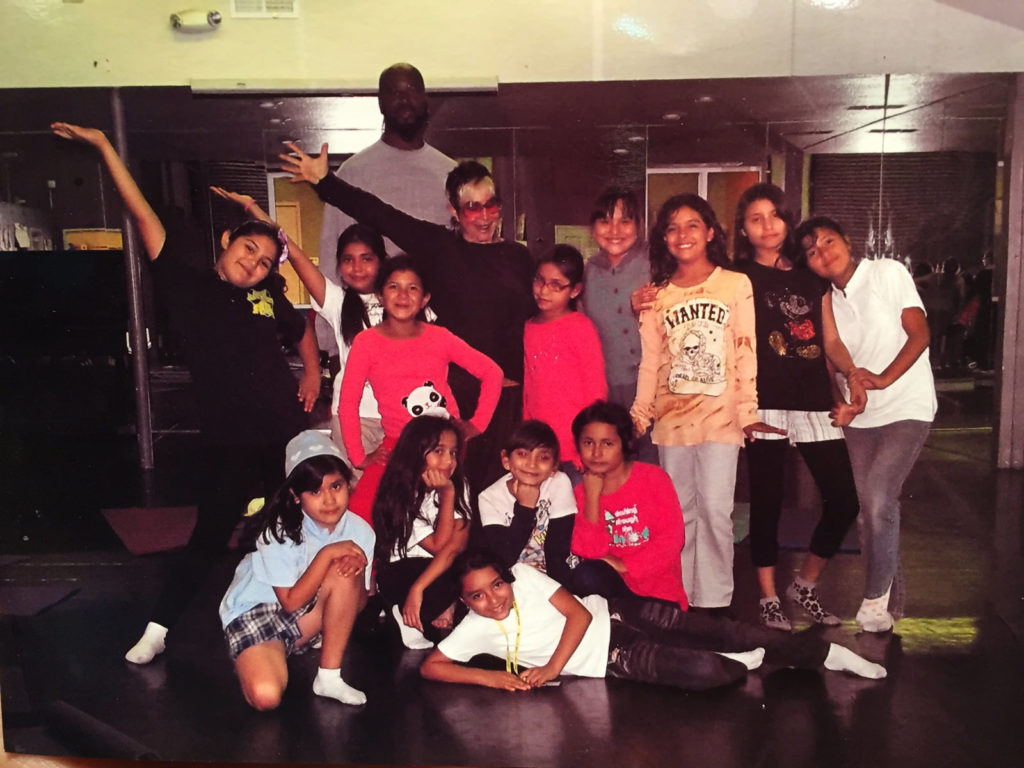
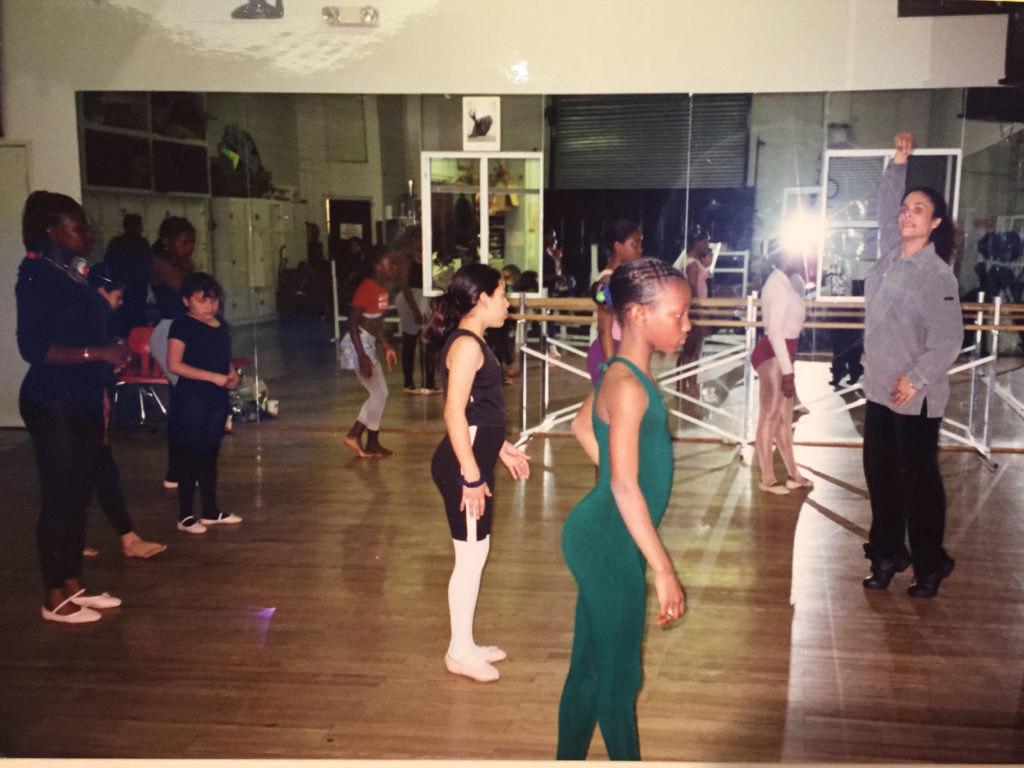
I took her to the center and the minute she came there, she said, “I’ll have this whole center painted for you.” We went in and she said, “You need a dance floor. I’ll put it in for you!”. And she did. She painted, put the windows in, the mirrors, barre and I had a dance studio. And the kids loved it! Every day I’d go there and watch the dancers and never once would I not cry. I couldn’t believe it, seeing these kids coming from inner city, sometimes they wouldn’t even have beds to sleep or food, but they danced and were so happy.
Jasmine put together a dance program and taught at APCH for quite a while; she brought in the most incredible dance teachers, including her sister Monica. We had an art room, we taught doll making. We made hundreds of dolls, and sometimes I’d ask them to write a story about their lives on a piece of paper and tie it to the doll. And believe me, those stories were so intense!
How were you raising money back then?
When I first started, that was something I had never done. So I’d write letters and would write “HELP” on them and send them out. Not once, 10 times to the same people. I went down to the California Community Foundation and got a list of everybody who gave money to children. The first funders were the Jacobs Foundation, and they had never ever funded anything like us. And after that it was just word of mouth.
You credit the film “Stand and Deliver” as one of the motivations for the work you did. Jaime Escalante was a visionary teacher and inspiration to so many. He invested his time and energy to transform one of the nation’s lowest-performing high schools (Garfield High School in East Los Angeles). You have a lot in common. What have you learned most from his work and activism?
I was deeply moved by the movie. I loved the teacher, I loved the kids. His determination created academic miracles at Garfield High School. He showed that children can come from such a hard area and rise above it all.
How often to you go to APCH?
I went recently I wanted to say goodbye and hello, goodbye to the center that I built and hello to the center that’s there. Jonathan Zeichner [executive director], is absolutely wonderful.
The way I ran APCH was freedom. No one had to do anything. When the gang members came in, I wouldn’t talk to them until they wanted to talk to me. It’s been 21 years since APCH was founded and more than 17, 000 kids have gone through the program. There was a tremendous need and it just got bigger and bigger.
A Place Called Home also is known for providing arts education and resources. Media Arts, Visual Arts, Dance, Music, Theater, Poetry, and Video are only some of the programs offered at APCH. Can you describe the relationship to children’s emotional well-being and artistic expression? In your opinion, do schools undervalue the connections of self-esteem, art, and academic achievement?
Art programs are always in danger of being cut. If you think about it, here we are in the area where there is no money, where families of the kids are in prison, the gangs are based on prison life, so a prison is a family name and each block is a different gang. So for these children to have music, dance, art as an outlet is amazing. What they get is an emotional release, emotional caring about themselves. I was talking to someone the other day, that said art was the only way he could get out of himself and into freedom. Nothing else could give him that freedom. I could feel that as well when I weave; I get out of my mind, I just meditate. I did a whole series on Obama and Frida Kahlo; I’m working on the Pope right now.
Can you speak about your personal struggles and how you applied those experiences to helping children?
I was mentally abused, sexually abused by my father, beaten half to death by my first husband. There was no love in my family. There was money, but no love. That’s why money never meant anything to me.
All those instances, every single thing that happened to me prepared me for my mission. When I had the accident, I felt like I lost my life, like all the children ran up in the plane and left. All these years it was really hard to accept it. My family was A Place Called Home. Before that my family was John Douglas. My family was where I worked, but kids were everything to me. All these horrible things that happened to me gave me the gift of A Place Called Home. So nothing bad happened to me. It was all a gift that created my ability to help anyone at any time.
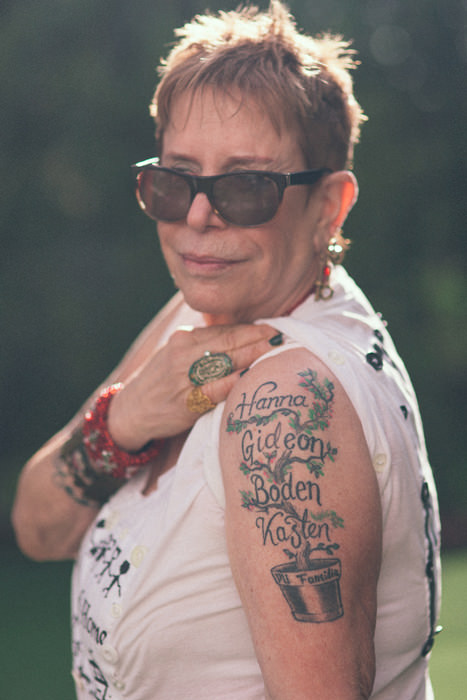
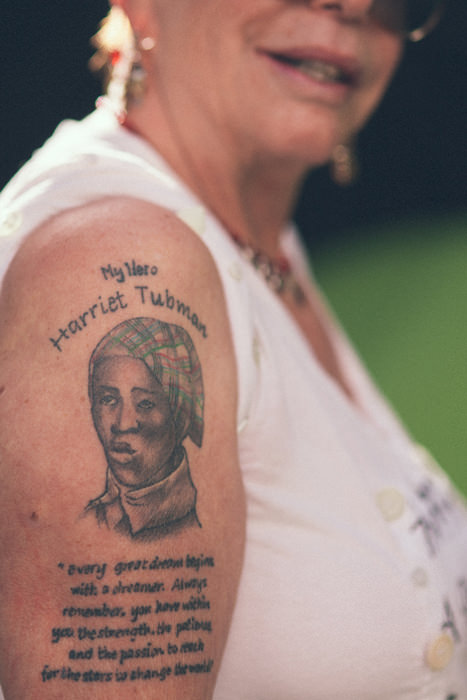
Debrah Constance by Polina Rabtseva
I feature fearless people like yourself- making a difference empowering, inspiring and making a change. Please name one person that you consider a real “warrior”?
Geoffrey Canada of Harlem Children’s Zone. He started in early 90’s as well and helped so many children and families in Harlem.
Interview by Irina Liakh,
Photography by Polina Rabtseva,
APCH archive photos courtesy of Debrah Constance